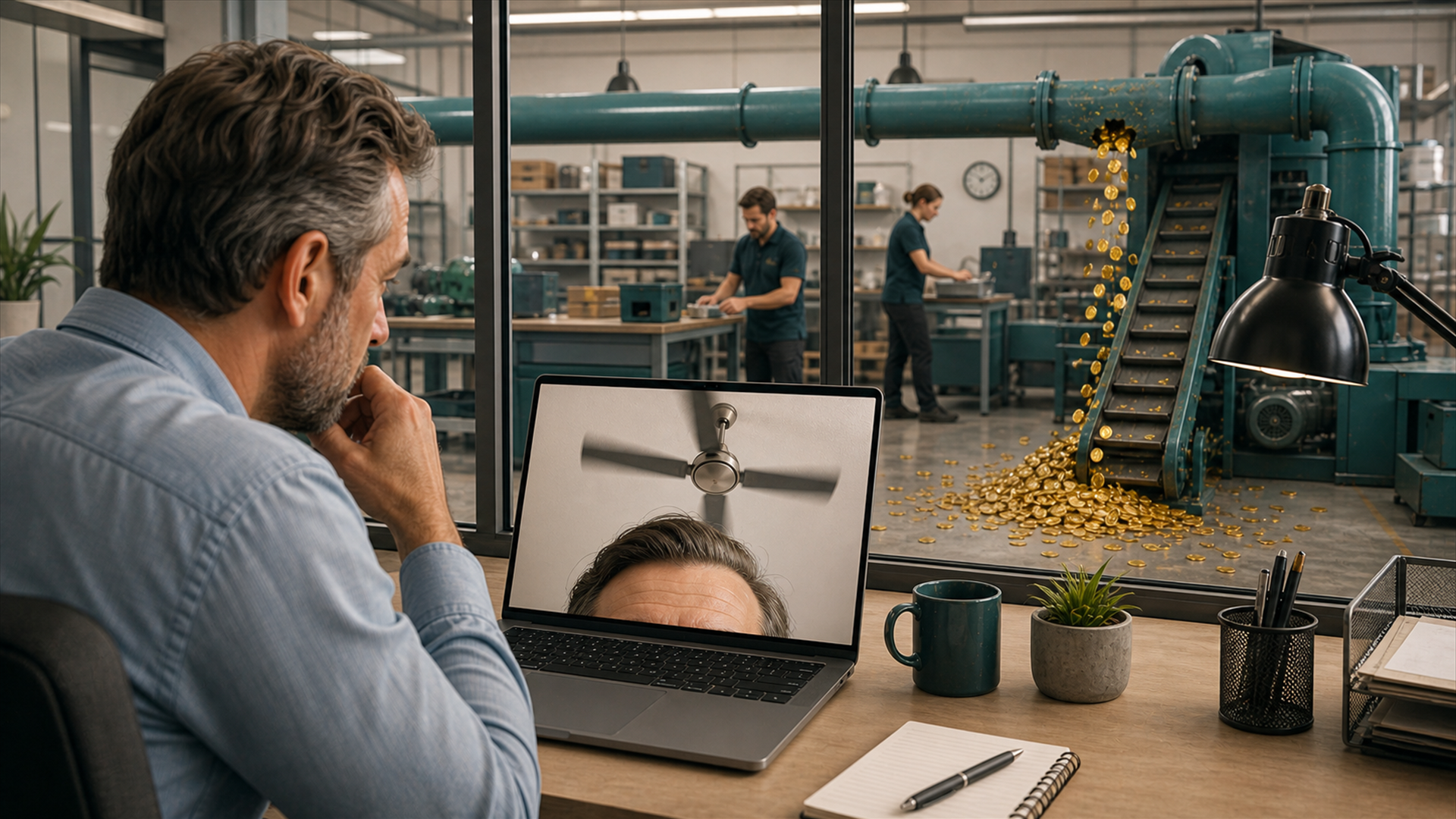
Anyone who claims to understand an entire operation from a webcam is selling confidence, not diagnosis. I would not pay extra for either one.
A remote diagnostic can reveal where value is being lost. It can also become an expensive séance with spreadsheets. The difference is not the video platform. It is whether the concern, the perimeter and the evidence are clear enough to support a useful finding.
The problem is not defined in advance
The useful starting point is the concern that prompted the inquiry, the part of the operation in view and what management needs to understand. The cause and remedy remain open. That is the point of a diagnostic.
Overtime may have risen while saleable output has not. Customer credits may be increasing. Work may be taking longer than expected. These are signals, not explanations. A remote review is worthwhile only if the available records and conversations can separate the plausible explanations.
A screen can carry evidence—but only some evidence
Remote work is well suited to records, transactions, comparisons and conversations with the people who do the work. One variance may still have several explanations. Rising overtime may reflect demand, planning, rework, missing material or a staffing decision. Each explanation should make different evidence visible. A colourful dashboard does not settle the matter.
The interviews matter for the same reason. People know where work waits, which handovers are repeated and what keeps the operation moving when the official process does not. Their accounts are evidence to compare, not testimonials to collect. Missing data is not an invitation to fill the gap with confidence.
Sometimes the most useful finding is that management has been making an important decision without dependable evidence. That is uncomfortable. It is also something the organisation can act on.
The screen has an edge
Remote diagnosis cannot show every physical constraint, informal workaround or behavioural detail. If repeated loss is visible but nobody can explain where the work waits, the screen may have reached its edge. If several credible explanations depend on seeing the work, an on-site phase is the honest next step.
That is not a failure of remote work. It is the diagnosis respecting its evidence boundary. A remote diagnostic can produce a useful map of what the available evidence supports. It should not pretend to be a large engagement in miniature.
The same boundary applies to ISO work
Much of an ISO 9001 transition review can be handled remotely: objectives, process ownership, records, internal findings and the way management uses the system. A screen can handle documents and a serious discussion quite well.
It still cannot prove that work on the floor matches the document. When remote evidence cannot settle a physical or behavioural question, an on-site check may be the honest next step. I keep that question separate from the Profit Leak Diagnostic, so the client knows which service is answering which question.
If you are wondering whether a problem can be diagnosed remotely—or whether you are about to buy a polished review with no evidential footing—send me a message. I can help define the scope and evidence before the engagement grows.